CrazyGL
Mouse Wave Text
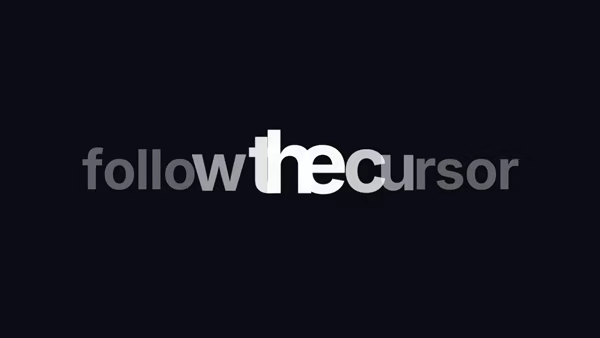
A wave travels along the heading following the cursor — each letter pops up as the wave passes, then settles back. Switch to auto mode for a hands-off demo.
Usage
import MouseWaveText from '@crazygl/hero-mousewavetext';

export default function App() {
	return (
		<MouseWaveText
			heading="ride the wave"
			mode="pointer"
			amplitude={36}
			textColor="#ffffff"
		/>
	);
}
Customise
- Content —
heading, the text rendered one span per letter. - Driver —
mode:pointer(the wave follows the cursor) orauto(it oscillates on its own). - Wave —
amplitude(peak letter rise in px),spread(how many characters the wave covers),autoSpeed(oscillation rate in auto mode). - Typography —
textColor,fontSize,headingFontFamily(any Google font),headingFontWeight. - Backdrop —
transparentBackgroundtoggle, or a solidbgColor.
Best for
- Playful SaaS and product landing headlines.
- Portfolios and personal sites wanting a single interactive flourish.
- Event / launch pages where the headline is the hero.
One command, zero config.
npm install @crazygl/hero-mousewavetextImport once, drop it in.
The component takes the same props you see in the live customizer on the right — every default ships poster-quality.
import MouseWaveText from '@crazygl/hero-mousewavetext';

export default function Landing() {
  return (
    <MouseWaveText />
  );
}SSR-safe by default.
The wrapper renders static HTML on the server and only initialises the canvas after hydration, so search engines see your copy.
// app/page.tsx — works in SSR-first frameworks (Next, Remix, Astro, etc.)
'use client';

import MouseWaveText from '@crazygl/hero-mousewavetext';

export default function Page() {
  return (
    <section>
      <MouseWaveText
        heading="Say hi."
        subheading="Your new hero."
      />
      <article>
        <h2>Welcome</h2>
        <p>Your content keeps its own voice below the hero.</p>
      </article>
    </section>
  );
}