CrazyGL
ASCII Nebula
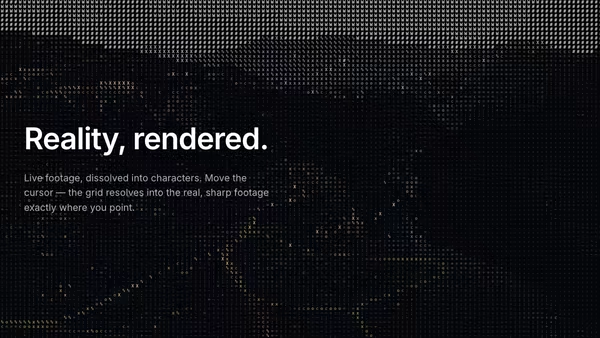
The whole background is a grid of ASCII glyphs that, from afar, reads as a soft drifting nebula — dense glyphs where the cloud is thick, sparse where it thins. The pointer locally reveals hidden structure: nearby glyphs grow larger, rotate slightly, and switch to denser symbols.
Usage
import AsciiNebula from '@crazygl/hero-ascii-nebula';

export default function Hero() {
	return (
		<AsciiNebula
			heading="Hidden structure."
			densityRamp=" .:+*#@"
			glyphColor="#c9c2ff"
		/>
	);
}
Customise
- Content —
heading+subheading, two-column, or a custom node. - Nebula —
densityRamp(glyphs thin → dense) orcustomCharsto swap in brand letters;cellSize(8–28px),cloudScale,driftSpeed,contrast. - Color —
glyphColor(pale violet by default) andbackgroundColor(near-black space). - Pointer —
revealRadius,revealStrength,glyphRotatetune how the cursor condenses, enlarges, and swirls nearby glyphs. - Backdrop —
transparentto drop the background fill.
Best for
- Developer tools, terminals and CLI products that want a "made of code" hero.
- AI / data and generative-art sites that want quiet technical texture.
- Creative-studio landing pages needing an interactive, atmospheric backdrop.
One command, zero config.
npm install @crazygl/hero-ascii-nebulaImport once, drop it in.
The component takes the same props you see in the live customizer on the right — every default ships poster-quality.
import ASCIINebula from '@crazygl/hero-ascii-nebula';

export default function Landing() {
  return (
    <ASCIINebula />
  );
}SSR-safe by default.
The wrapper renders static HTML on the server and only initialises the canvas after hydration, so search engines see your copy.
// app/page.tsx — works in SSR-first frameworks (Next, Remix, Astro, etc.)
'use client';

import ASCIINebula from '@crazygl/hero-ascii-nebula';

export default function Page() {
  return (
    <section>
      <ASCIINebula
        heading="Say hi."
        subheading="Your new hero."
      />
      <article>
        <h2>Welcome</h2>
        <p>Your content keeps its own voice below the hero.</p>
      </article>
    </section>
  );
}