CrazyGL
Particle Slider
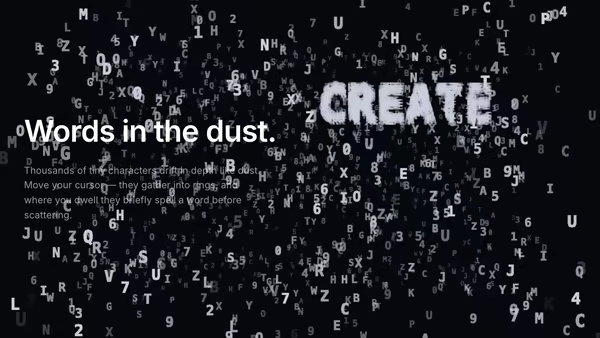
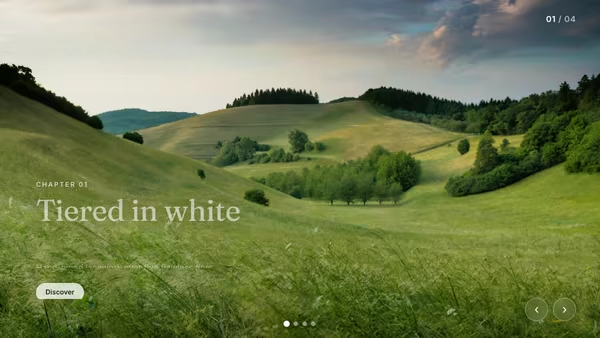
A cinematic auto-playing slider built on one shared particle engine. Each slide picks a visualization — magnetic sphere, spiral galaxy, liquid wave field, vortex portal, image-to-particle, particle text, neural cloud, cube lattice, orbital rings, terrain — and the thousands of particles MORPH from one formation into the next instead of resetting. The field reacts to the pointer (repel / attract / magnetic). Per-slide heading, subheading, CTA, text transition and layout. Dark, premium, developer-grade.
Usage
import ParticleSlider from '@crazygl/hero-particle-slider';

export default function Page() {
  return (
    <ParticleSlider
      slideCount={4}
      autoplaySeconds={5}
      particleCount={3000}
      pointerMode="repel"
    />
  );
}
Customise
- Slider —
slideCount(1–8),autoplaySeconds,dotStyle(bars / dots / lines / hidden). - Per slide —
slideNHeading/slideNSubheading/slideNCta/slideNCtaHref,slideNViz(the formation),slideNTransition,slideNLayout,slideNAccent,slideNImage(mask),slideNText(particle word). - Particles —
particleCount,particleSize,baseColor. - Pointer —
pointerMode,pointerStrength,pointerRadius,rotationSpeed. - Backdrop —
bgTop/bgBottom,transparent. - Typography —
headingFontFamily.
Best for
- Developer-tool and platform landing pages.
- AI / infrastructure products and premium SaaS.
- Launch pages that want a single hero to tell a multi-beat story (Apple/Vercel/Stripe-grade, dark and technical).
One command, zero config.
npm install @crazygl/hero-particle-sliderImport once, drop it in.
The component takes the same props you see in the live customizer on the right — every default ships poster-quality.
import ParticleSlider from '@crazygl/hero-particle-slider';

export default function Landing() {
  return (
    <ParticleSlider />
  );
}SSR-safe by default.
The wrapper renders static HTML on the server and only initialises the canvas after hydration, so search engines see your copy.
// app/page.tsx — works in SSR-first frameworks (Next, Remix, Astro, etc.)
'use client';

import ParticleSlider from '@crazygl/hero-particle-slider';

export default function Page() {
  return (
    <section>
      <ParticleSlider
        heading="Say hi."
        subheading="Your new hero."
      />
      <article>
        <h2>Welcome</h2>
        <p>Your content keeps its own voice below the hero.</p>
      </article>
    </section>
  );
}