CrazyGL
Crystal Refraction Field
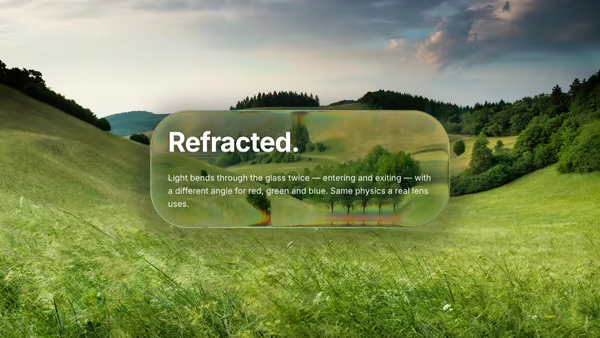
Six raymarched octahedral crystals drift across the screen, refracting the background through each face with per-channel chromatic dispersion at the rim.
Usage
import CrystalRefractionField from '@crazygl/hero-crystal-refraction';

export default function Page() {
  return (
    <CrystalRefractionField
      heading="Refracted."
      subheading="Six crystals drifting through space, refracting everything behind them."
      backgroundImage="https://crazygl.com/samples/nature4.avif"
      crystalCount={6}
      refraction={1}
      chromatic={1}
    />
  );
}
Customise
- Content —
contentType(heading/two-columns/custom),heading,subheading, or custom nodes. - Background —
backgroundImage(cover-fit, refracted through the crystals), orbgFallbackA/B/Cfor the procedural gradient. - Layout —
centerX,centerYposition the cluster in the frame. - Arrangement —
crystalCount,orbitRadius,orbitTilt,radiusJitter,bobAmount,orbitSpeed,spinSpeed. - Crystal —
tint,rimColor,refraction,chromatic,fresnel,crystalSize,speed(master time scale). - Typography —
headingFontFamily.
Best for
- Luxury product and jewellery launch pages.
- Premium SaaS, AI, fintech and crypto brand sites with a high-end feel.
- Editorial or fashion covers wanting a tactile, light-bending centerpiece.
One command, zero config.
npm install @crazygl/hero-crystal-refractionImport once, drop it in.
The component takes the same props you see in the live customizer on the right — every default ships poster-quality.
import CrystalRefractionField from '@crazygl/hero-crystal-refraction';

export default function Landing() {
  return (
    <CrystalRefractionField />
  );
}SSR-safe by default.
The wrapper renders static HTML on the server and only initialises the canvas after hydration, so search engines see your copy.
// app/page.tsx — works in SSR-first frameworks (Next, Remix, Astro, etc.)
'use client';

import CrystalRefractionField from '@crazygl/hero-crystal-refraction';

export default function Page() {
  return (
    <section>
      <CrystalRefractionField
        heading="Say hi."
        subheading="Your new hero."
      />
      <article>
        <h2>Welcome</h2>
        <p>Your content keeps its own voice below the hero.</p>
      </article>
    </section>
  );
}