CrazyGL
Glass Typography
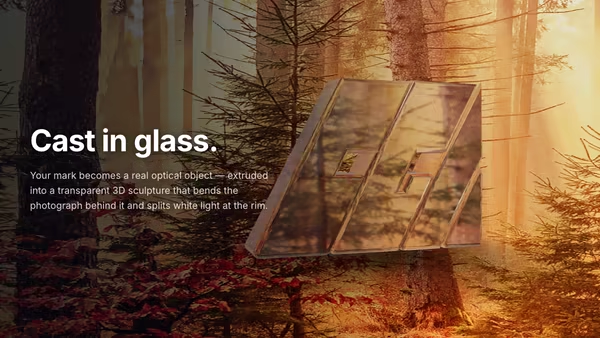
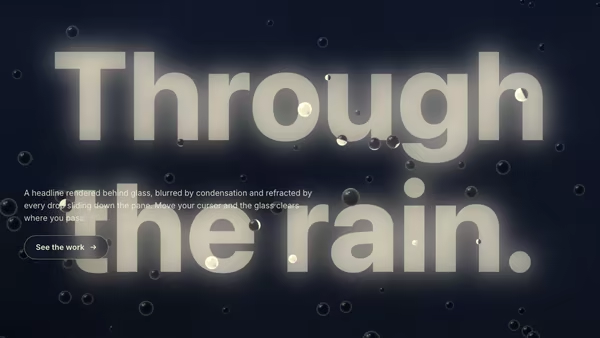
A headline cast in transparent optical glass: Three.js TextGeometry extruded into a real 3D object, rendered with MeshPhysicalMaterial (transmission, IOR, dispersion, clearcoat) so it visibly refracts the moving gradient behind it. Pointer parallax tilts the camera and CTA hover sweeps a bright edge highlight across the letters.
Usage
import GlassTypography from '@crazygl/hero-glass-typography';

export default function Page() {
  return (
    <GlassTypography
      heading="Crystalline."
      backgroundImage="https://crazygl.com/samples/nature1.avif"
      ior={1.45}
      dispersion={1.2}
    />
  );
}
Customise
- Content —
heading(the word cast in glass),subheading. - CTA —
ctaLabel,onCTAClick(URL string or function); hovering it triggers the sweep. - Glass material —
textColor,transmission,roughness,ior,glassThickness,dispersion. - Lighting —
envIntensity(procedural HDRI strength). - Backdrop —
bgMode(image/gradient),backgroundImage(image or video, cover-fit, screen-locked), orbgGradientStart/End/Angle+bgAnimationSpeed. - Interaction & sweep —
pointerParallax,sweepColor,sweepDuration. - Typography —
headingFontFamily,headingFontWeight,headingY.
Best for
- Luxury product pages and premium SaaS / design-tool launches
- Fintech and private-banking landing pages
- High-end agency and portfolio sites where the headline is the hero object
One command, zero config.
npm install @crazygl/hero-glass-typographyImport once, drop it in.
The component takes the same props you see in the live customizer on the right — every default ships poster-quality.
import GlassTypography from '@crazygl/hero-glass-typography';

export default function Landing() {
  return (
    <GlassTypography />
  );
}SSR-safe by default.
The wrapper renders static HTML on the server and only initialises the canvas after hydration, so search engines see your copy.
// app/page.tsx — works in SSR-first frameworks (Next, Remix, Astro, etc.)
'use client';

import GlassTypography from '@crazygl/hero-glass-typography';

export default function Page() {
  return (
    <section>
      <GlassTypography
        heading="Say hi."
        subheading="Your new hero."
      />
      <article>
        <h2>Welcome</h2>
        <p>Your content keeps its own voice below the hero.</p>
      </article>
    </section>
  );
}